400–500 mm Round / Square
Dimensions match humanoid center of gravity and payload layout — round and square options, compact structure.

Powered by our self-developed 3D multi-line LiDAR navigation chassis — a single multi-line LiDAR delivers full spatial perception and obstacle avoidance, eliminating single-line LiDAR, depth cameras, ultrasonic sensors and drop sensors. Tbot-N5-3D six-wheel mid-drive differential and Tbot-OW omnidirectional wheel, smooth passage over overhangs, narrow aisles and low obstacles, payload 100–500kg customizable.
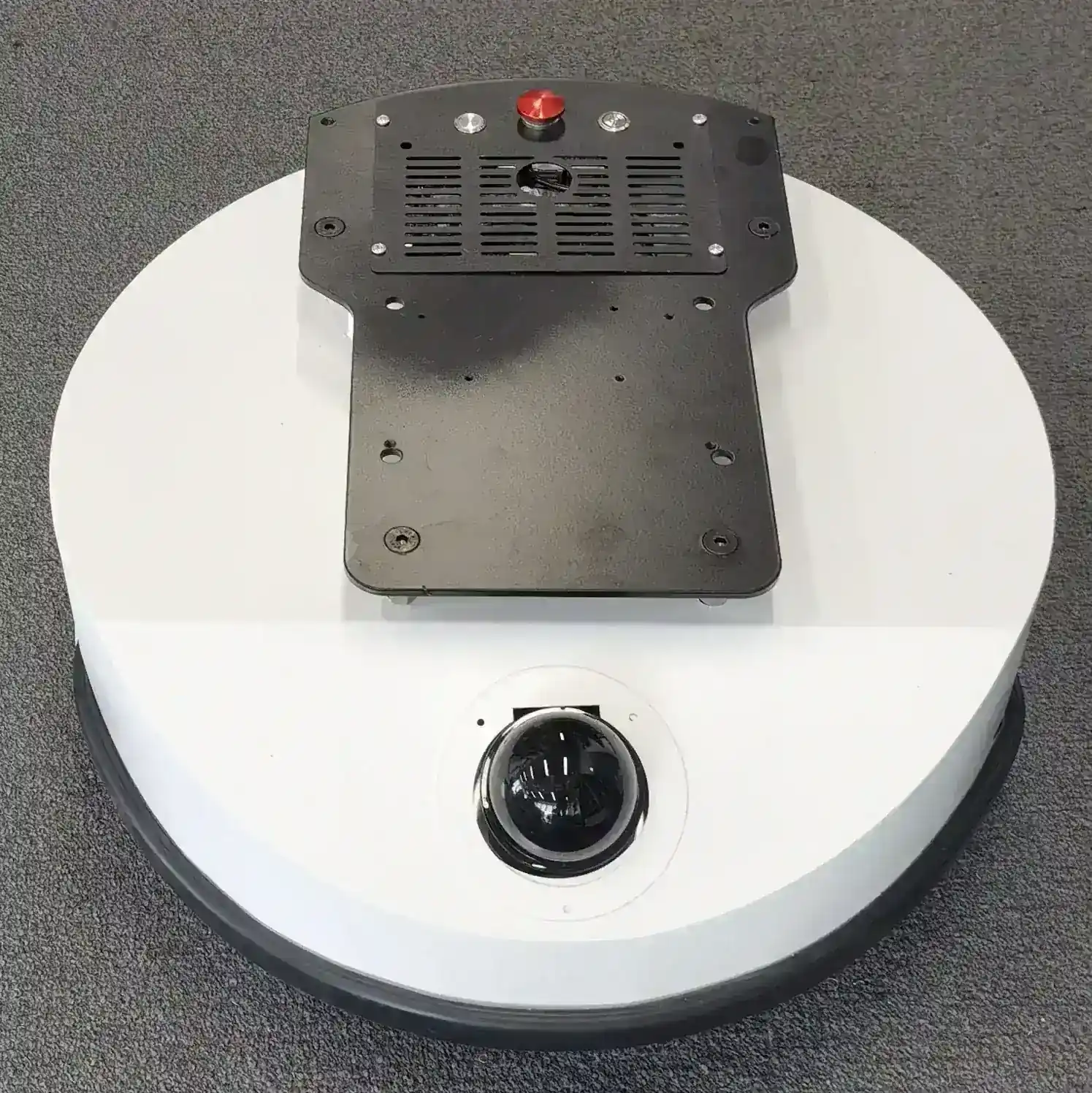
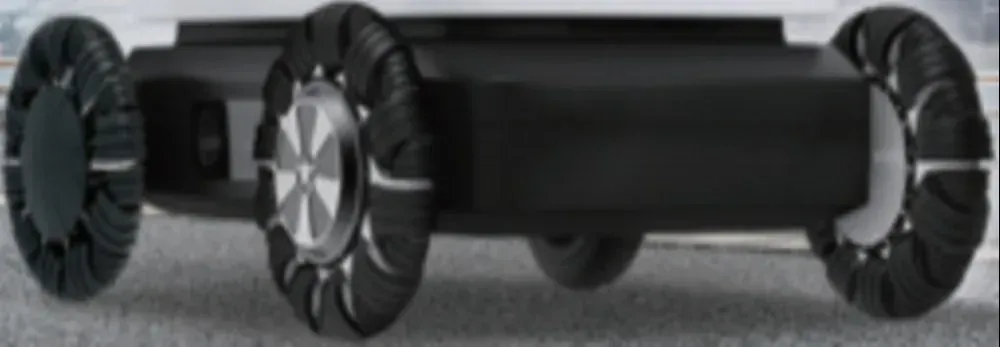
3D multi-line LiDAR navigation chassis with spatial perception and obstacle avoidance — eliminating single-line LiDAR, depth cameras, ultrasonic sensors and drop sensors; available as differential or omnidirectional chassis. One multi-line LiDAR navigates smoothly over overhangs, narrow aisles and low obstacles. Ideal for humanoid robot spatial obstacle avoidance; supports 32/64/128-line multi-line LiDAR. Optional dual front/rear LiDAR + depth camera + ultrasonic array for 360° blind-spot-free perception; ≥10h no-load / 6h full-load battery life; ROS interface available.
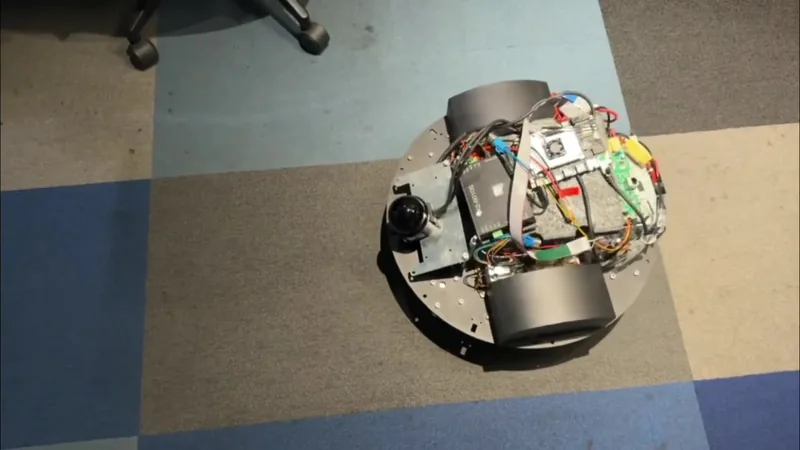 3D SLAM Chassis · Live Demo 1
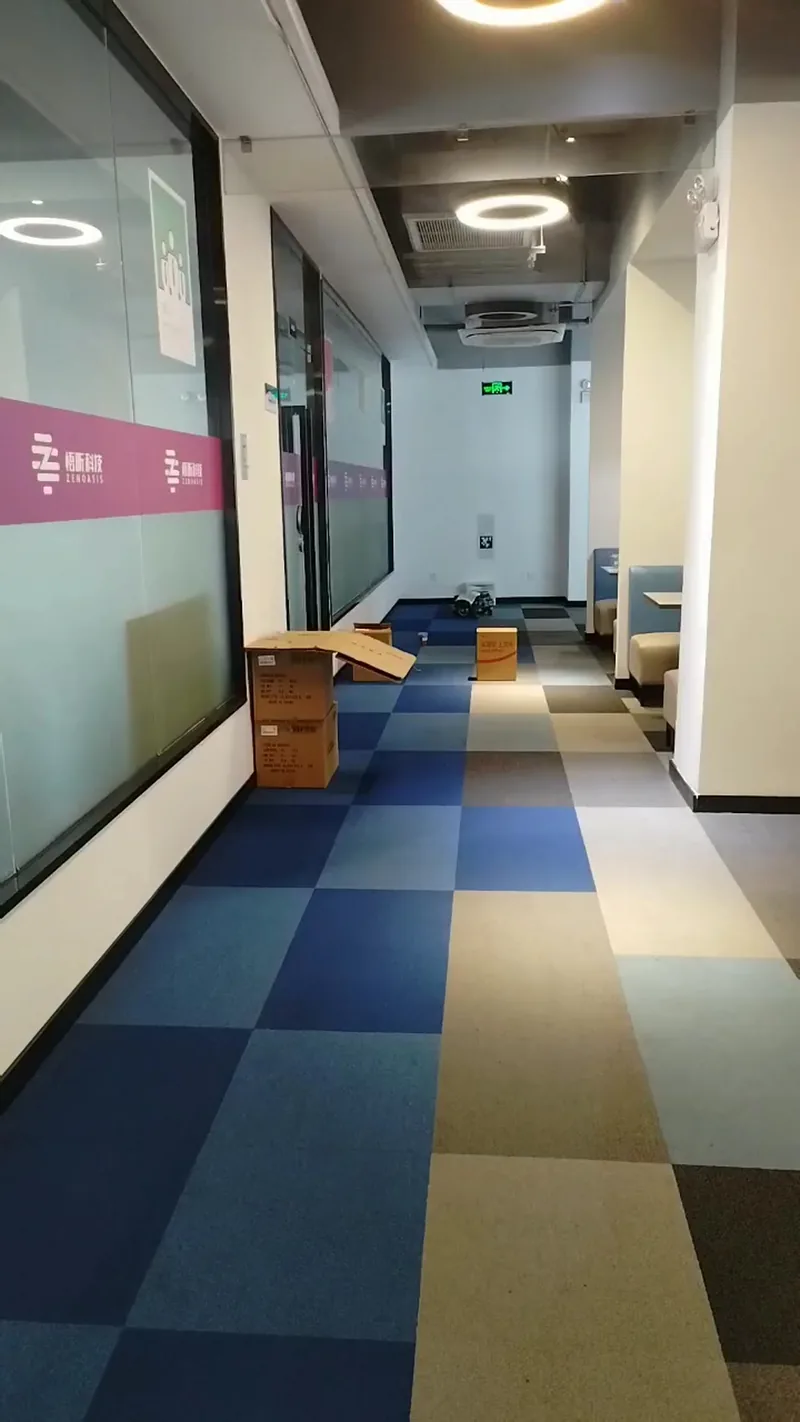 3D SLAM Chassis · Live Demo 2
400–500 mm round and square chassis options, 10mm re-localization accuracy; supports mainstream domestic sensors and electronics with a large customer base, and is already in the shipping supply chain of multiple humanoid robot makers; optional dual front/rear LiDAR + depth camera + ultrasonic array for 360° blind-spot-free perception; ≥10h no-load / 6h full-load battery life; ROS interface available.
Dimensions match humanoid center of gravity and payload layout — round and square options, compact structure.
High-precision repeat and re-localization for reliable docking, charging, workstation and elevator alignment.
Compatible with mainstream domestic sensors and electronics — low integration cost, fast adaptation.
Already shipping within multiple humanoid robot supply chains — stable mass production and delivery.
Humanoid robots have a high center of gravity and work in 3D space: single-line LiDAR scans only one plane and misses overhanging shelves, low obstacles and step edges. 3D multi-line LiDAR provides complete spatial awareness so the robot sees up, down and around — safer walking and avoidance, naturally suited to humanoids.
One 3D multi-line LiDAR replaces the single-line LiDAR + depth camera + ultrasonic stack: lower cost, higher reliability, simpler calibration and maintenance; 10mm re-localization supports fine docking; optional dual front/rear LiDAR + depth camera + ultrasonic array for 360° blind-spot-free perception, ≥10h no-load / 6h full-load battery life, ROS interface; already shipping in multiple humanoid supply chains — the mainstream choice for next-generation robot navigation.
| Comparison | Traditional Single-line LiDAR | 3D Multi-line LiDAR |
|---|---|---|
| Perception | 2D single plane | 3D spatial perception |
| Overhangs / low objects | Not detected, collisions | Smooth passage over overhangs, narrow aisles & low objects |
| Sensor setup | LiDAR + depth camera + ultrasonic stack | One LiDAR is enough |
| Positioning accuracy | Moderate re-localization | 10mm re-localization |
| Narrow aisles & complex scenes | Limited, stuck easily | Smooth in narrow & complex scenes |
| Cost & maintenance | High cost, complex calibration | Simplified, reliable & cost-effective |
Tongxing H2 (Tbot-H2) is a dual-arm wheeled humanoid robot: a wheeled base with 3D multi-line LiDAR SLAM navigation for autonomous mapping and obstacle avoidance, integrated with dual 7-DoF bionic arms (5 kg payload per arm), depth vision and voice interaction, supporting dual-arm collaborative grasping, drag teaching and teleoperation for smart manufacturing, material handling and research education.
Mapping, navigation, path planning, bionic arm kinematics/dynamics, trajectory planning and vision algorithms support teaching and research.
Chassis integrates 3D multi-line LiDAR and vision for indoor/outdoor mapping, path planning and dynamic spatial avoidance — one LiDAR for overhangs, narrow aisles and low objects.
7 DOF per arm, 5kg payload, kinematic solving, trajectory planning and dual-arm coordination; the chassis supports waist-coordinated control for complex tasks.
Drag-teach replay and imitation learning let the robot use human tools via teleoperation and learn tasks quickly.
Depth vision for recognition, grasping and environment understanding, combined with voice interaction for human-robot collaboration.
Open with rich learning resources and easy-to-use software across development and communication options.
Integrated design saves space and eases maintenance — compact and agile.
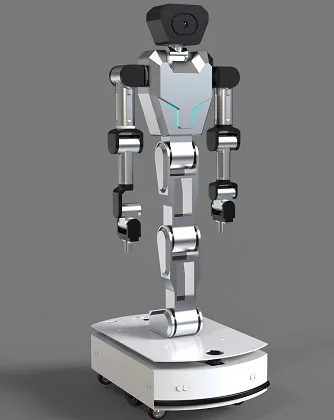
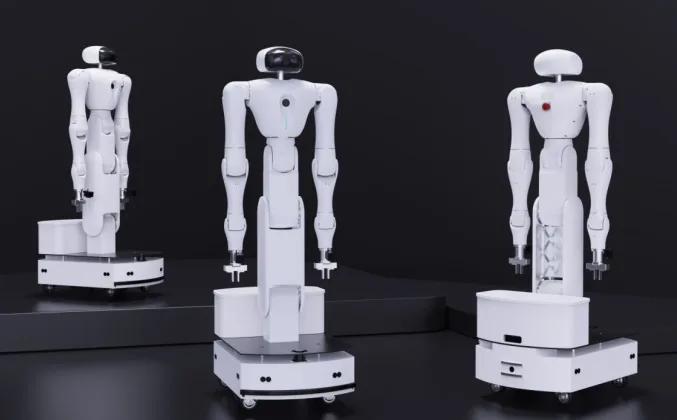
Turning traditional robots into highly intelligent products with hands, feet, ears, eyes, touch and a brain — teachable, self-planning and practical.
Multiple secondary development forms and communication methods with high openness.
Built for industrial manufacturing and material handling, it offers rich learning resources, convenient software and open APIs.
| Model | Tbot-H2 |
|---|---|
| Total Height | 1600 mm |
| Single-Arm DOF | 7 |
| Single-Arm Payload | 5 kg |
| Mobility | Wheeled Chassis |
| Navigation Method | 3D Multi-line LiDAR SLAM · Spatial Perception & Avoidance |
| Safety Sensing | Single 3D multi-line LiDAR (360° × vertical FOV options: -12°~50° / -10°~90°), no ultrasonic/depth camera/drop sensors; optional dual front/rear LiDAR + depth camera + ultrasonic array for 360° blind-spot-free perception |
| Gripper | Two-Finger Gripper |
| Human-Like Functional Units | head motion, waist rotation, leg bending, dual-arm motion |
| Interaction Methods | Voice interaction, teleoperation, drag teaching |
| Development Support | Multiple secondary development & communication options |
Leading "AI + Robot" innovation for industrial manufacturing, material handling and teaching & research.
Smart factories get mapping, navigation and dual-arm coordination, replacing dull, hard or dangerous repetitive work.
Autonomous mobility on a 3D multi-line LiDAR chassis with dual-arm grasping for material transport and loading/unloading.
Open development and communication options support robotics, SLAM navigation and motion planning teaching & research.
For humanoid, cleaning, delivery, reception and inspection robots, the 3D multi-line LiDAR can be inverted on top of the robot for a higher, farther and unobstructed 3D field of view.
Mounted on top of the robot, it looks over desks, stacks and crowds; a 360° horizontal scan is not blocked by the body, detecting obstacles early at long range.
High top mounting with 32/64/128-line LiDAR reaches 40–60 m, enabling early slow-down and detour in large spaces, factories and parking lots.
Outputs a full 3D point cloud; overhead pipes, low obstacles, glass doors and step edges are all detected, supporting 3D navigation and semantic avoidance.
The top LiDAR is IP65 (dust- and water-spray protected); the whole robot is IP54, suited for malls, factories, underground garages and other demanding commercial environments.
| LiDAR Lines | 32 / 64 / 128-line multi-line LiDAR selectable |
|---|---|
| Detection Range | 40 ~ 60 m |
| Localization Accuracy | Coarse: ±5 cm; precise: ±2 cm |
| Localization, Navigation & Avoidance | 3D multi-line LiDAR localization, navigation and avoidance; supports 3D point-cloud avoidance |
| Battery Life | No load ≥ 10 h; full load 6 h |
| Climbing | 15° |
| Obstacle Crossing | 2 cm |
| Min. Aisle Width | 56 cm |
| Robot Protection | IP54 |
| LiDAR Protection | IP65 |
| E-Stop | E-stop button supported |
| Environment Integration | Supports automatic doors and elevators |
From perception and navigation to motion control and task decision-making, a complete embodied AI stack enabling autonomous robot movement and operation.
LiDAR / visual SLAM, multi-sensor fusion, object detection & segmentation, 3D point-cloud processing.
Global & local path planning, costmaps, semantic navigation.
Pose control, trajectory & velocity optimization, trajectory tracking, motor control.
Embodied learning and intelligent decision-making for autonomous tasks in complex scenarios.
A single 3D multi-line LiDAR replaces stacked sensors, cutting cables, connectors and failure points for a simpler system.
Fewer failure points raise MTBF and lower service costs, keeping the robot stable over long-term operation.
No need to run multi-modal fusion at once; lower main-controller compute load, less heat and power draw.
Lower sensor and compute overhead benefits battery life: ≥10 h no load, 6 h full load.
Years of accumulated Tbot platform R&D across multiple product generations — mature, stable and battle-tested.
Technology nurtured from university research — a solid engineering foundation with continuous innovation.
Deep partnership with a major robot OEM: standardized lines, strict QC, reliable delivery from prototype to volume.
Served by a dedicated professional robot after-sales service company with a complete team and clear split across R&D, production and service.
Real-time response, fast diagnosis and fix to keep robots running continuously.
A complete service network and spare-parts support so customers can buy and operate with confidence.
One-stop customization of design, structure, hardware, software and platform — from prototype to mass production.